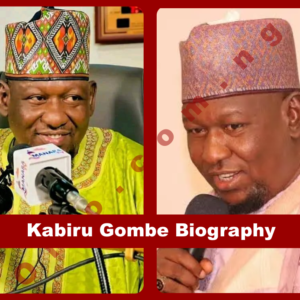
Rabiu Kwankwaso is a Nigerian politician born October 21, 1956. Former Kano Governor, Defence Minister, Senator. Net worth ₦42 billion. NNPP leader.
Rabiu Musa Kwankwaso stands as one of Nigeria’s most influential political figures. Born on October 21, 1956, in Kwankwaso village, Madobi Local Government Area of Kano State, he has built a remarkable political career spanning over three decades. The 69-year-old politician has served as Governor of Kano State twice, Minister of Defence, and Senator, establishing himself as a charismatic populist with widespread support across Northwestern Nigeria. His political journey is marked by strategic moves across different political parties and a distinctive grassroots movement known as Kwankwasiyya. With his iconic red cap becoming a symbol of his political brand, Kwankwaso has remained a formidable force in Nigerian politics. As the national leader of the New Nigeria Peoples Party and the party’s presidential candidate in the 2023 elections, his influence continues to shape the country’s political landscape.
Quick Facts About Rabiu Kwankwaso
| Detail | Information |
|---|---|
| Full Name | Mohammed Rabiu Musa Kwankwaso |
| Date of Birth | October 21, 1956 |
| Age | 69 years (as of 2026) |
| Birthplace | Kwankwaso, Madobi LGA, Kano State |
| Profession | Politician, Engineer |
| Net Worth | ₦42 billion (approx. $34 million) |
| Spouse | Salamatu Rabiu Musa (m. 2000) |
| Children | 8 children |
| Education | Kaduna Polytechnic, Middlesex University, Loughborough University |
| Current Position | National Leader, New Nigeria Peoples Party |
| Famous For | Kwankwasiyya Movement, Two-term Kano Governor |
Early Life and Family Background
Rabiu Musa Kwankwaso was born into a prominent Sunni Muslim Fulani family of the Genawa Fulani Clan. His father, Musa Sale Kwankwaso, held the prestigious position of village head of Kwankwaso with the title Sarkin Fulani, Dagacin Kwankwaso. The elder Kwankwaso’s influence extended further when he was elevated to District Head of Madobi by the Kano Emirate Council under Emir Alhaji Ado Bayero, receiving the title Majidadin Kano, Hakimin Madobi. Growing up in a family with strong ties to traditional leadership profoundly influenced young Rabiu’s worldview. The cultural and political environment of Kano State shaped his early interest in governance and public service. His upbringing instilled values of leadership and community service that would later define his political career. The respect commanded by his father in the Kano Emirate provided him with insights into traditional governance structures.
Educational Journey and Professional Foundation
Kwankwaso’s educational path began at Kwankwaso Primary School before moving to Gwarzo Boarding Senior Primary School. He continued his education at Wudil Craft School and Kano Technical College, laying a solid foundation in technical skills. His academic pursuits took him to Kaduna Polytechnic, where he earned both his National Diploma and Higher National Diploma in Civil Engineering. His thirst for knowledge led him abroad for postgraduate studies. Between 1982 and 1983, he studied at Middlesex Polytechnic in the United Kingdom. He later obtained a Master’s degree in Water Engineering from Loughborough University of Technology in 1985. Kwankwaso was an active student leader during his school days, serving as an elected official of the Kano State Students Association. In 2022, he earned his PhD in Water Engineering from Sharda University in India, demonstrating his commitment to continuous learning.
Early Career as Water Engineer
In 1975, before entering politics, Kwankwaso joined the Kano State Water Resources and Engineering Construction Agency of the Government of Kano State. This marked the beginning of his professional journey in the civil service. He served in various capacities for seventeen years, gradually rising through the ranks. His dedication and expertise eventually earned him the position of principal water engineer. These formative years provided him with technical expertise and administrative experience. Working in the state government exposed him to the workings of public service and the challenges facing ordinary citizens. The experience he gained understanding infrastructure development would later inform his governance style. His engineering background gave him a practical, results-oriented approach to problem-solving that became evident in his political career.
Entry Into Politics and Rise to Prominence
Kwankwaso made his political debut in 1992 on the platform of the Social Democratic Party. He joined the People’s Front faction led by the late General Shehu Yar’adua, aligning himself with prominent politicians including Atiku Abubakar, Bola Tinubu, and Babagana Kingibe. That same year, he was elected to the House of Representatives representing Madobi Federal Constituency. His subsequent election as Deputy Speaker of the House of Representatives catapulted him into the national political spotlight. This position brought him recognition and established his credentials as a serious political player. During the 1995 Constitutional Conference, Kwankwaso was elected as a delegate from Kano. He later joined the Democratic Party of Nigeria during General Sani Abacha’s political transition program.
First Term as Kano State Governor
In 1998, Kwankwaso joined the People’s Democratic Party under the People’s Democratic Movement platform led by Mallam Musa Gwadabe. In 1999, he contested the PDP primaries against notable rivals including Abdullahi Umar Ganduje, Mukthari Zimit, and Ambassador Kabiru Rabiu. He emerged victorious and was elected Governor of Kano State, serving from May 29, 1999, to May 29, 2003. His first tenure was eventful and marked by significant achievements. He introduced free feeding for primary school students, a program that earned United Nations recognition. His administration focused on education, rural electrification, and healthcare development. He established the Kano University of Science and Technology in Wudil, the state’s first public university. However, his tenure also faced opposition from various political groups who disagreed with his governing style.
Minister of Defence and Political Wilderness
After losing his re-election bid in 2003 to Ibrahim Shekarau, President Olusegun Obasanjo appointed Kwankwaso as Minister of Defence. He became the first Minister of Defence of the Fourth Republic with no prior military background, serving from 2003 to 2007. This appointment was significant as it demonstrated confidence in civilian leadership of military affairs. When he attempted to return as governor in 2007, Kwankwaso was unsuccessful in securing the PDP nomination. Following this setback, President Obasanjo appointed him as Special Envoy to Somalia and Darfur. President Umaru Yar’Adua later made him a board member of the Niger Delta Development Commission, a position he held until resigning in 2010. These years in the political wilderness tested his resilience.
Second Term and the Kwankwasiyya Movement
Kwankwaso made a triumphant political comeback in 2011, winning the gubernatorial election and serving from May 29, 2011, to May 29, 2015. During this second tenure, he implemented an ambitious development agenda that transformed Kano State. He built roads, hospitals, and schools while sending hundreds of residents abroad for higher education through scholarship programs. His second term saw the formalization of the Kwankwasiyya movement, a political structure that became his signature achievement. The movement, characterized by the iconic red cap, created a loyal grassroots following that extended beyond Kano. He constructed over 5,000 classrooms and rehabilitated over 4,000 kilometers of roads. The Kwankwasiyya Foundation was established to provide healthcare, education, and social services to the people.
Party Politics and Presidential Ambitions
In August 2013, Kwankwaso was among seven governors who formed the G-7 faction within the PDP. In November 2013, he defected to the newly formed All Progressives Congress alongside five G-7 members. In 2015, he contested the APC presidential primaries but lost to Muhammadu Buhari, who went on to become president. After his gubernatorial term ended in 2015, Kwankwaso was elected Senator representing Kano Central Senatorial District, serving from 2015 to 2019. In July 2018, he returned to the PDP along with fourteen other APC senators. He contested the PDP presidential primaries in October 2018, finishing fourth behind Atiku Abubakar. In 2022, Kwankwaso left the PDP and joined the New Nigeria Peoples Party.
2023 Presidential Campaign
In April 2022, Kwankwaso declared his intention to run for president under the NNPP platform. On June 8, 2022, he emerged as the party’s presidential candidate at a special convention in Abuja, running unopposed. He selected Bishop Isaac Idahosa, General Overseer of God First Ministry, as his running mate for the 2023 elections. During the campaign, Kwankwaso was invited to the Royal Institute of International Affairs, Chatham House in the UK, to discuss his vision for Nigeria. In the February 2023 presidential election, Kwankwaso and Idahosa finished fourth place with approximately 1.5 million votes, representing 6.23 percent of the total votes cast. Despite not winning, he maintained his position as NNPP national leader.
Personal Life and Family
Kwankwaso divorced his first wife in 1999 following his election as governor. He married Salamatu Rabiu Musa in 2000, who became the First Lady of Kano State during his second term. Salamatu, an alumna of Government Girls College Kabo, is known for maintaining a low media profile. She has been described as disciplined and passionate about education. Together, Kwankwaso has eight children from both marriages. His daughter A’isha Kwankwaso is married to Abba Kabir Yusuf, who later became Kano State Governor. His son Mustapha Kwankwaso, born March 26, 1984, has followed his father’s footsteps into politics. Another son, Al-Amin Kwankwaso, also remains active in political circles. Kwankwaso values family privacy and rarely discusses his children publicly.
Philanthropic Work and Legacy Projects
Through the Kwankwasiyya Development Foundation, Kwankwaso has made significant philanthropic contributions. The foundation secured the release of 170 inmates from various Nigerian prisons by paying their fines and providing transportation for their return home. He has donated sports kits and cash exceeding 150 million naira to amateur football clubs across Nigeria. The foundation regularly distributes cash and food items to vulnerable populations including widows, people with disabilities, and orphans. On his 64th birthday in 2020, Kwankwaso inaugurated a 300-pupil capacity solar-powered school in Rano Local Government with six classrooms. His scholarship programs have sent thousands of students abroad for higher education, creating opportunities for young Nigerians.
Net Worth and Assets
As of 2025, Rabiu Kwankwaso’s estimated net worth stands at approximately ₦42 billion or $34 million. His wealth stems from decades in public office, strategic land investments, and business ventures. He owns significant real estate holdings in Kano, Abuja, and Kaduna. His property portfolio includes high-value assets in the Federal Capital Territory used for political and diplomatic engagements. Kwankwaso’s car collection includes luxury vehicles such as Mercedes-Benz G-Wagon, Toyota Land Cruiser, and Lexus LX 600. His wealth also comes from his influence in the NNPP and donor-based funding from political allies. While not a traditional businessman, his long-term public service and political relevance have maintained his position among Nigeria’s political elite.
Controversies and Legal Challenges
In March 2004, a six-member commission of inquiry headed by Justice Ahmed Badamasi was established to investigate Kwankwaso’s activities as governor. In 2015, the Concerned Kano State Workers and Pensioners group petitioned the Economic and Financial Crimes Commission, alleging he misappropriated 10 billion naira in pension funds for housing projects that benefited his associates. On July 2, 2015, Justice Mohammed Yahaya of the Kano High Court restrained the EFCC from arresting Kwankwaso. However, on July 16, 2015, the same judge reversed his order and granted the EFCC permission to investigate and prosecute Kwankwaso. In 2016, the EFCC denied having any pending corruption case against him. Kwankwaso strongly denied all allegations, describing them as political blackmail sponsored by his rivals.
Political Philosophy and Leadership Style
Kwankwaso is widely regarded as a charismatic populist with strong grassroots appeal. His leadership style emphasizes direct engagement with ordinary citizens through the Kwankwasiyya movement. He has been described as bold and forthright, expressing his views without concealing his feelings. His signature red cap has become a powerful symbol of political identity in Northwestern Nigeria. His governance approach prioritizes education, infrastructure development, and youth empowerment. He believes in building strong political structures at the grassroots level. Kwankwaso’s willingness to move between political parties demonstrates his pragmatic approach to achieving political objectives. His influence extends beyond Kano, commanding respect across Northern Nigeria’s political landscape.
Final Thoughts
Rabiu Kwankwaso’s journey from a village in Madobi to becoming one of Nigeria’s most recognizable politicians is truly remarkable. At 69 years old, he has achieved what many could only dream of in Nigerian politics. His net worth of ₦42 billion reflects decades of public service and strategic positioning. From engineering to politics, Kwankwaso has consistently demonstrated leadership and vision. His two terms as Kano Governor left indelible marks on the state’s development trajectory. The Kwankwasiyya movement he created has become a formidable political force that transcends traditional party structures. While his presidential ambitions remain unfulfilled, Kwankwaso’s impact on Nigerian politics is undeniable. As NNPP national leader, he continues to shape political discourse and provide alternative leadership options. His legacy of educational scholarships and infrastructure development will benefit generations of Nigerians long after his active political career ends.
Frequently Asked Questions
Q1: Who is Rabiu Kwankwaso?
Rabiu Kwankwaso is a prominent Nigerian politician born on October 21, 1956, in Madobi, Kano State. He served as Governor of Kano State from 1999 to 2003 and again from 2011 to 2015. He is currently the national leader of the New Nigeria Peoples Party and was the party’s presidential candidate in the 2023 elections.
Q2: What is Rabiu Kwankwaso’s age?

Rabiu Kwankwaso is 69 years old as of 2026. He was born on October 21, 1956, making him a Libra. He celebrated his most recent birthday in October 2025.
Q3: What is Rabiu Kwankwaso’s net worth?
Rabiu Kwankwaso’s estimated net worth is approximately ₦42 billion or $34 million as of 2025. His wealth comes from decades in public office, strategic land investments in Kano and Abuja, political influence, and business ventures in real estate and construction.
Q4: What is the Kwankwasiyya movement?
The Kwankwasiyya movement is a political and ideological structure founded by Rabiu Kwankwaso during his second term as Kano Governor. It is characterized by the iconic red cap and focuses on grassroots mobilization, education, and youth empowerment. The movement has loyal followers across Northwestern Nigeria.
Q5: Is Rabiu Kwankwaso married?
Yes, Rabiu Kwankwaso is married to Salamatu Rabiu Musa, whom he wed in 2000. He was previously married but divorced his first wife in 1999. He has eight children from both marriages, including his daughter A’isha who is married to current Kano Governor Abba Kabir Yusuf.
Q6: What political positions has Kwankwaso held?
Kwankwaso has held numerous positions including Deputy Speaker of the House of Representatives (1992), Governor of Kano State (1999-2003 and 2011-2015), Minister of Defence (2003-2007), and Senator representing Kano Central (2015-2019). He is currently the national leader of the New Nigeria Peoples Party.
Q7: What were Kwankwaso’s major achievements as governor?
As governor, Kwankwaso built over 5,000 classrooms, rehabilitated over 4,000 kilometers of roads, established Kano University of Science and Technology, introduced free feeding for primary school students, and sent hundreds of residents abroad on scholarships. His rural electrification program earned widespread praise and UN recognition.